
Understanding Why the Mind Wanders When the World Gets Quiet

If you’ve ever wondered why you overthink — especially at night — you’re not alone. Sometimes, it feels as if a few characters are living inside our minds, each one quietly fighting for the remote control. One of them is grounded, practical, and focused — the part of your brain that likes lists, plans, and getting things done.
But the other?
That one is dreamier and more introspective, often appearing when the outside world becomes quiet. It wanders through memories, worries, imagined futures, and all the “what-ifs”, sometimes regardless of your preferences.
Now … picture a crow. Alternatively, perchance, choose to direct your attention to the illustrated crow below. This crow is really introverted, and essentially mostly hibernates when there’s too much going on. Urgent task? The crow disappears. Need to be social? The crow has all but one feather out the door.
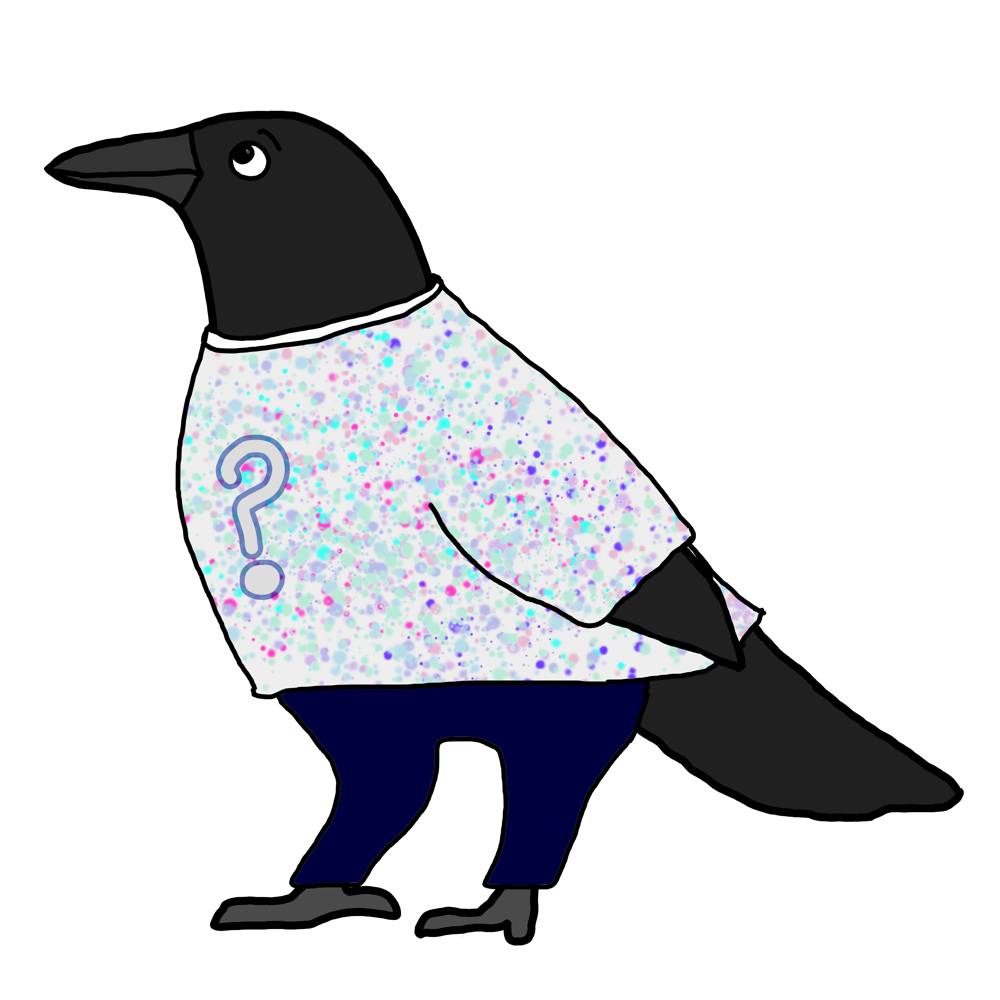
On the flip side, certain situations give the crow a whole new level of energy — like a twelve-year-old who just discovered caffeine. Nothing happening at all? The crow shows up instantly. Trying to sleep but not quite tired enough yet? That’s prime crow-time.
At this point, I should acknowledge that this crow is in fact a symbol, or rather a metaphor. A friendly way to describe the energy of the Default Mode Network (DMN). So what exactly is this mysterious network?
The idea of a “default mode” was first noticed in the late 1990s, and the network itself was formally identified in the early 2000s (Raichle et al., 2001), when researchers realised that some brain regions become more active during rest than during mentally demanding tasks — a surprising discovery at the time.
In simple terms, it’s the part of the brain that becomes active when you’re not focused on the outside world. It lights up during daydreaming, mind-wandering, reflection, imagination, and revisiting memories — all the internal scenes your mind creates when nothing external demands your attention.
What the Default Mode Network Actually Does
When the DMN (or crow) activates, it draws your attention inward. It replays old memories, simulates future possibilities, and connects dots, sometimes emotional ones, you didn’t ask it to connect. It creates storylines, “what-ifs”, hypothetical scenarios, and sometimes entirely imaginary conversations.
Waiting in an unusually slow elevator and suddenly remembering that time you accidentally replied yes two months ago when someone asked how you were? Thank the crow.
Imagining better comebacks you could’ve given in an argument from 2019 while washing dishes? That’s the crow again.
Questioning whether you should have signed off that email with Kind regards instead of Many thanks, and thinking about it for way too long? Iconic crow behaviour.
Simulating a dozen different future outcomes for something that hasn’t even happened yet? Classic DMN energy.
When Your Emotions Influence the DMN
When it comes to the brain, no network works alone. A crow might spend time flying, but it’s always taking in information from below, often landing on a stray branch here and there before taking off again. The DMN, while more active at certain times, constantly communicates with emotional and attentional systems.
If you’re already stressed, overwhelmed, or generally operating at a level of baseline anxiety, the crow tends to fly faster and in more chaotic circles.
When you pair a wandering mind with emotional turbulence, the crow embarks on a bumpy flight. This is the perfect storm: spirals, intrusive memories, imaginary arguments, or worries that snowball into apocalyptic scenarios.
Think of the DMN crow as part mood-ring, part programmable chameleon — it will fly regardless, but the direction it chooses depends on what you’re feeling beneath the surface. It’s also a creature of habit, sometimes preferring to follow flight paths similar to ones it’s already familiar with.
Exhaustion, insecurity, or emotional fatigue don’t necessarily create new worries — they simply make the crow more likely to circle the same ones again and again.
Why Overthinking Gets Louder at Night
When the outside world finally goes quiet, the brain shifts its priorities. The networks primarily responsible for focus, planning, social awareness, and task management all begin to wind down. With fewer distractions and no real external demands, the Default Mode Network (or Crow) finally has a clear runway to take off from.
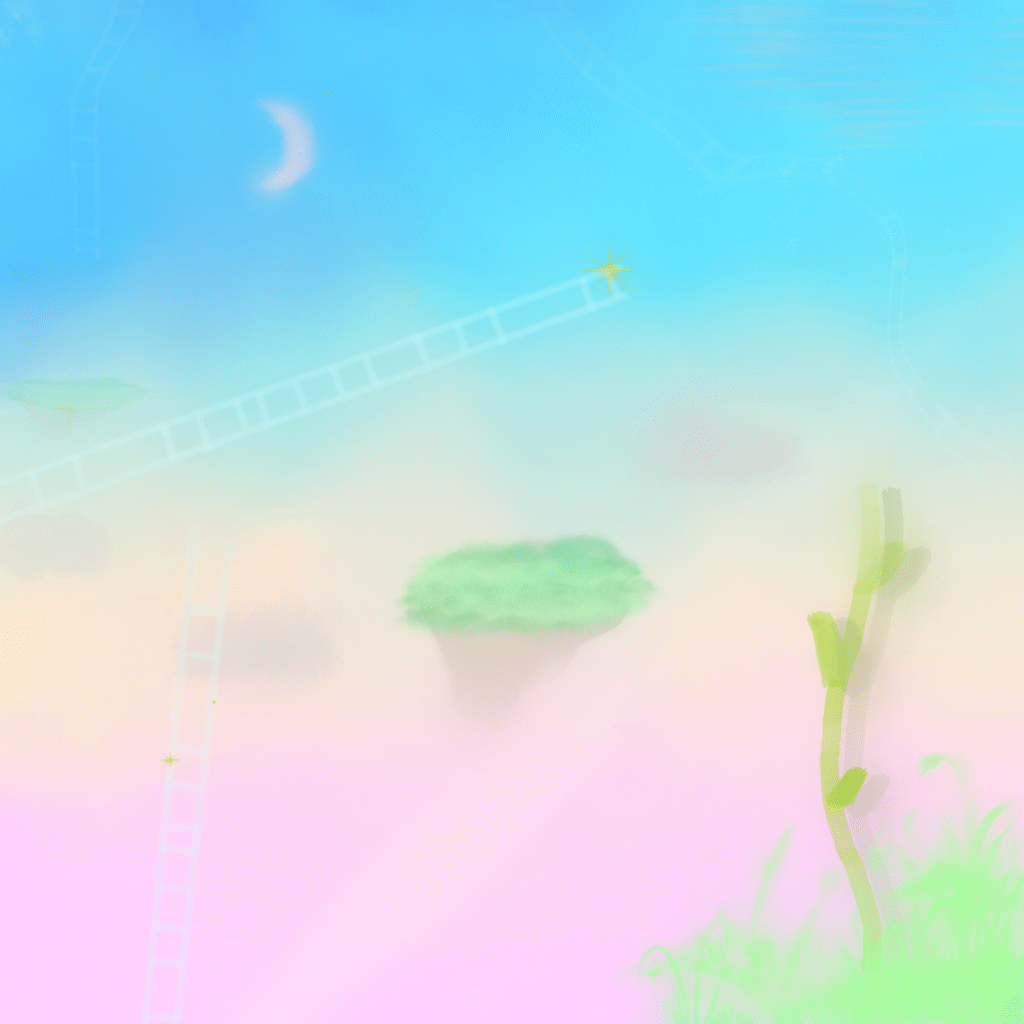
This is why overthinking often shows up the moment you’re trying to fall asleep. The crow finally has an open sky. No urgent tasks to complete, no conversations to track — nothing competing for mental bandwidth. So the DMN wanders more freely, drifting into memories, imagined scenarios, and a sequence of “what-ifs” it didn’t get the chance to fully explore during the day.
Sometimes, the wandering can be reflective and freeing, acting as a gentle bridge into the world of the subconscious. However, when tiredness teams up with stress or emotional overload, the crow can wander far more chaotically. That’s when late-night thought loops begin to form.
Experiencing this doesn’t mean something is wrong with you — it’s simply your brain working with what it has, in a moment where the world is quiet, and the crow is fully awake.
Understanding Your Wandering Mind
The crow isn’t your enemy — it’s simply the part of your mind that comes alive when things get quiet. Overthinking is not a personal flaw, but a natural side effect of how the brain processes memories, emotions, and possibilities. When you understand what the DMN is doing, the spirals feel a little less mysterious and, perchance, a little more human.
Where exactly it wanders is a complex combination of past experience, emotional residue, and the quiet of the moment. And while we can’t always choose the flight paths our thoughts take, we can learn to support the crow — gently calming the system behind it, especially during stressful or tired moments.
But even before that, simply knowing why your mind behaves this way can make the whole experience feel less like a flaw and more like a familiar creature stretching its wings in the dark. More on that, perchance, in another article.
If you’re curious about some of the other brain characters, I’ve also written an article on how the crow interacts with a fox and a penguin in the process of decision-making.
References
Azarias, F. R., Almeida, G. H. D. R., de Melo, L. F., Rici, R. E. G., & Maria, D. A. (2025). The Journey of the Default Mode Network: Development, Function, and Impact on Mental Health. Biology, 14(4), 395. https://doi.org/10.3390/biology14040395
Raichle, M. E., MacLeod, A. M., Snyder, A. Z., Powers, W. J., Gusnard, D. A., & Shulman, G. L. (2001). A default mode of brain function. Proceedings of the National Academy of Sciences, 98(2), 676–682. https://doi.org/10.1073/pnas.98.2.676